Truth be told, I have struggled with writing this blog post (the very reason this is now a month late). In the past, I have struggled with writing “progress” posts on my intentions because I have worried my level of progress has been minimal, and possibly it has been. The thing we, as humans, often forget is that progress to any degree is still progress.
My own awareness that progress is progress has allowed me to see most of the positive steps over the course of the last six (seven) months. I feel overwhelmed by the things I’ve done while also recognizing many of the things I want to continue working on. Organizing my thoughts feels near impossible, so I will do my best, with the intention to encourage and motivate others (and myself). I’m going to highlight 10 important things I have learned about being curious in my life so that you, the reader, may also find inspiration to get curious.
Curiosity allows us to move from self-protection to self-exploration.
“My life is exactly as it should be.” I believe that. I also believe accepting that as truth is sometimes exceptionally difficult. For someone with trauma, especially someone who struggles with believing sexual assault was her own fault, life doesn’t seem like it is as it should be. Yet, life doesn’t have to be perfect or ideal to BE. Each and every decision brings us to where we are, and where we are is, in truth, perfect, because it is what is here, despite sometimes feeling terrible. Here’s the thing, I can’t change this very moment, and I can’t change the past. I can make one decision at a time to change the course of my future. In the meantime, every decision I have made up to now has brought me here, and here is where I am supposed to be.
Believing my life is as it should be at this moment affords me the opportunity to make that next decision, and I am learning my choice is to be authentic and true to myself or be the person everyone wants or expects me to be. In 2022, I read something about trauma that gave me an idea. From an early age, I focused on self-protection rather than self-exploration. Self-protection, for me, was about being who I was expected to be, and it guaranteed familiarity and predictability. Trauma, especially early trauma, will force a person to choose self-protection over authenticity, and eventually, those who have experienced trauma don’t know who they are. Well, why would I want to continue on the self-protection path when I know there is something better out there? I made a list of things I enjoyed doing at one time or another, things I wanted to try, and things I know I currently love. I wanted to start creating the life I REALLY desire; I wanted to follow the self-exploration path. That requires a considerable amount of curiosity.
Here are some things on my list. Going for a drive and getting lost, being outside, movement and activity, being with friends, coffee and coffee dates, the gym, trying new food, singing, dancing, having friends over, cookouts, bonfires, the beach, trying new things, camping, hiking, running, lifting, pushing my limits, cleanliness, roller coasters, reading, writing, talking, vacations, animals and birds, trucks, mountain biking, adventures, traveling, relaxing on the porch, being alone, Math and Science, the woods, and music.
Curiosity is observation without judgment
I have learned something from trying to regularly do the things on my list. Curiosity is more about observation and full participation—being actively engaged and aware—than anything else. I could do every one of those things on my list and claim I like them because they are novel, exciting, or preferred over something else, but just because something is novel and/or exciting doesn’t mean I want it to be a part of me or my daily life. I must listen to my body and mind while doing those things. Our bodies tell us a lot about ourselves, others, and our environments.
I know I enjoy sitting on my porch and reading; looking up occasionally to watch the birds at my feeder. I also know that despite the peace and quiet outside and the beautiful birds 10 feet away from me, sometimes the sun feels too hot. In those situations, I don’t enjoy sitting on my porch. In those moments, it just isn’t for me. My choice is to sit in the heat and potentially experience heat exhaustion (a very real possibility for me) or go inside where it is cooler. Or maybe I love reading and have the opportunity but don’t like a particular book I’ve started reading. I can put that book down and not pick it back up again. I had to do that this year. I had to choose between a “don’t quit” character quality and enjoyment. I didn’t finish the book. Hiking is awesome. I started in high school and fell in love with it. I just recently started again, and I have realized there are certain types of hikes I dislike. I can choose more selectively with that information. If I weren’t paying attention to my thoughts, feelings, and body, I could force myself into doing something that I eventually lose love for. My therapist tells me to get granular a lot, and something like interests require the same level of specificity. Finally, I discovered that something I used to enjoy, I don’t anymore. Because of health issues, I eat much differently than I used to—differently than most people I know—so, cookouts aren’t really for me. That’s okay. There are plenty of other things to do and explore. There is plenty in my life to be curious about.
Curiosity precedes contentment
Expectations are a killer of joy and contentment. I am finding when I have expectations for who I should be, how something should go, or what others are doing, I get frustrated. Worse, I experience shame for not doing what I think I should be doing or being who I should be. I use the word “should” deliberately but with the understanding that “should” is not a thing.
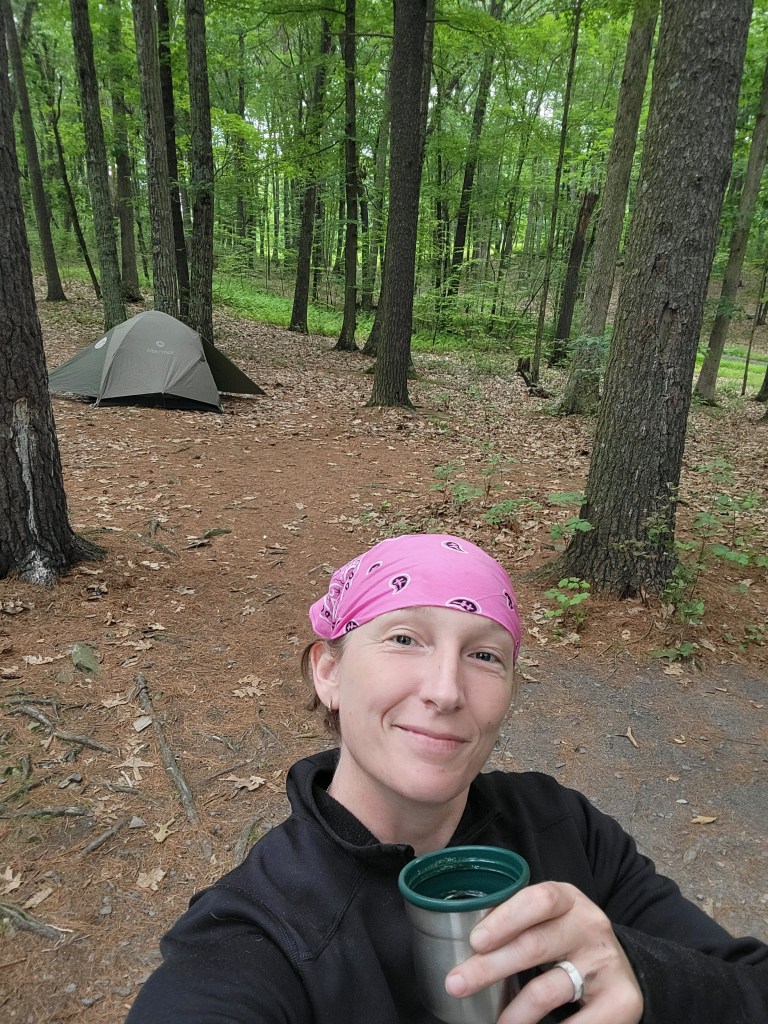
My son and I went camping this year. We had a great time. Unfortunately, there was a vicious storm that popped up for a few minutes on our last night, and my son has decided that he hates camping. I had plans—expectations—for that evening, but they were squashed by my son’s fear of another storm popping up. Instead of doing what we planned, we sat in the car for 3 hours. Disappointing? Frustrating? Annoying? Sure. That camping trip SHOULD have gone differently. It SHOULD have been perfect. Expectations open up that can of worms. When I look back on it, we had some great games of Go Fish in that three-hour timespan.
In contrast, I have done plenty of stupid stuff this year. Too many to count. Who hasn’t? In the past, I would have punished myself. Mental (and sometimes physical) lashings to prevent these mistakes from happening again. Those lashings have never worked though. They did beat me down. Curiosity about my choices has afforded me the opportunity to experience contentment despite my decisions. I have a ridiculous example.
Earlier this year, I spent time and energy preparing a garden. I planted seeds and watered them faithfully. I hand-tilled the ground, shoveled 4 cubic yards of mushroom soil from my driveway to the garden, put up a fence, and planted my small starters in the ground. The few days before I planted those starters, I didn’t water them. They sat in my window where the hot afternoon and evening sun shone, and by the time I put them in the ground, they were wilted. Every one of those plants died in the garden. In the past, I would have been hyper-focused on the money and time I wasted. This time, I laughed at myself, bought plants from Lowe’s, and replanted my garden. I could do that because I was able to be curious about why this all happened. I had really good reasons for not watering the plants. I was super busy. My dad was having surgery and my mom needed someone to care for her. I planned to go to Michigan for two weeks to do just that. My life was hectic prior to going, and watering those plants took the back burner. When I returned, I evaluated whether I had time, started the garden again, and now feel a sense of contentment with what may or may not grow in that garden.
Curiosity is about the process
I wrote in a previous blog post that curiosity is about the process rather than the outcome—the focus can’t be on the end. It is about learning, not knowing. I am not choosing to be curious so things always feel right. I am choosing curiosity so I can get used to seeing things as they are, whether I perceive those things as good or bad. Curiosity gives me choices rather than control. Control, rather lack of control, is excruciating. When I feel out of control, I lash out in anger—toward myself or others, run away, or fight for whatever control I can obtain—usually something that involves stupid choices.
Many of my therapy sessions over the years have followed this pattern. The pattern goes like this: 1. I struggle to talk about something but feel like I need to. 2. I’m given an opportunity to talk about it but freeze. 3. I try again and start to feel emotional (and sometimes physical) pain. I tense up, feel sad, hate feeling vulnerable, and jump to a new topic. 4. Then, I feel angry and punish myself for not “sucking it up” and talking about the things I need to talk about. I would need to fight the impulses to self-harm, which is frustrating given the length of time I have gone without harming myself.
Being curious about the pattern allowed me to focus more on the process—my own process and the process of therapy. My ability to talk about my traumas is about choice, and as long as I am curious about the process, I can accept each moment—in session and outside of session—as an opportunity. I don’t have to talk about things if I am too overwhelmed, but I can. By focusing on my internal process rather than what I planned to talk about, each session feels like an opportunity rather than a terrifying attempt to both embrace and escape retraumatization in a confusing, senseless fight with younger parts of myself.
Curiosity is about learning rather than knowing
Another one of my experiences with curiosity was in a therapy session. I had written about self-awareness in one of my previous blog posts, and my therapist read it and provided me with some feedback. “I don’t believe you are self-aware.” Her honesty was valuable to me. She read a definition from Kendra Cherry, MSEd, “Self-awareness is your ability to perceive and understand the things that make you who you are as an individual, including your personality, actions, values, beliefs, emotions, and thoughts. Essentially, it is a psychological state in which the self becomes the focus of attention.” My concept of self-awareness was based on my “ability” to shame myself for anything I did that wasn’t perfect or what was expected of me (either my own expectations or others).
My focus was much more on my self-consciousness and not meeting others’ expectations. I thought I knew myself, but it turns out I wasn’t even trying to learn about myself. Hearing what my therapist said and getting curious about self-awareness allowed me to see that I have spent most of my life trying to gain the approval of others and have abandoned myself in the process; another reason why I needed to make the above list and start some true self-discovery. I don’t need to know myself right now, but I can learn about myself and get comfortable with who I am. And who I am is constantly changing. I am becoming.
Curiosity is about allowing and sometimes embracing
In March and April, I took an 8-week Mindfulness-Based Stress Reduction class. It was my second time taking the course, and I believed there was so much more to grasp than what I gained the first time. Although it is a group experience, it is also very much a personal experience. Curiosity with both the interpersonal and intrapersonal aspects taught me a lot.
One of the concepts I grasped was through a phrase the instructor used. “Allow it to be here because it already is.” The ugly stuff I have unsuccessfully avoided for years is here. It has been following me everywhere. If the ugly stuff can’t be avoided, perhaps allowing it to be a part of me will diminish the power. That was the point of the dragon story I wrote about in a previous blog post. In the story, the dragon continued to grow as the family denied dragons were real. When they acknowledged, allowed, and accepted it, the dragon shrunk to a manageable size.
When I asked my therapist about rape (another previous blog post), I was mostly in denial—yet curious. Instead of embracing self-blame, I was able to begin embracing the truth. That is a huge step. Below is an explanation.
Curiosity can help you heal
Curiosity related to my question about rape has given me an opportunity to consider different aspects of healing and therapy. There is a benefit to believing “it” was my fault. Carrying shame is familiar and feels safe. Believing someone else is responsible suddenly takes away my power and control. The problem is that I have punished myself for over 30 years and have yet to heal. Being curious is the only way out of this mess.
Not too long ago, I had a nightmare that completely disoriented me. I woke up and couldn’t process where I was but knew I had to be in my home and safe. I managed to pull myself out of bed to change the scenery that felt eerily similar despite being quite a bit different. I remember teetering between conscious awareness and a flashback as I walked to the bathroom and continued trying to figure out how to regain real-time presence. I don’t remember making it to the bathroom or returning to my bed, yet I woke up that morning equally confused and terrified. I’m struggling to process that nightmare, and my therapist challenged me to drop in and out of the content as part of my process. Things have come up that have put that on hold, but I have noticed that as the contents of the nightmare flood semi-regularly, I can be curious. My curiosity about what is happening with my body and mind has already moved me toward more progress that I could have imagined not even two years ago.
Also recently, something happened that triggered the suicide part to take action. I know that seems so far out from where I have been the past 950+ days, and it is my conditioned, natural response to stress and trauma. There are two things I want to mention about this situation.
—–My natural inclination is to lean toward self-blame. I often tell my therapist that I am the common denominator and therefore must be at fault. When the same thing happens to you repeatedly, it seems only logical to approach it from that angle. Is this the voice of people who have blamed me or punished me in the past or is this actually true? It isn’t just a pattern to blame myself. It is also normal for me to let everyone else off the hook. The challenge is to be curious about whether this is true or not and live accordingly.
—–Suicide is a scary topic. I want to share something that I would not recommend or condone because what I am about to disclose was a deliberate decision based on years of work and conversations with parts of myself that have, in many ways, learned to trust me. I was exceptionally triggered and felt restless, angry, and overall agitated. I tried to sit with parts with seemingly no success. The suicide part was exceedingly loud, so I reached out for help. Help wasn’t accessible. I asked all other parts to give me some time with the suicide part, and I told the suicide part I was willing to do what it wanted if I could first write a note. The part could participate in writing the note and then decide whether following through was what it wanted to do. To be able to do something like this, I had to be curious about what the suicide part needed. I had to be curious about how I could help. Finally, I had to be curious enough to write some of the things I wrote. Those things were painfully true and necessary to the process. Again, I don’t condone that, and I would go so far as to say it was kind of stupid. It worked for me in the moment, though, and I am glad I did it. I have a greater appreciation for several people in my life. I have a greater appreciation for the suicide part. I have a greater appreciation for myself, the decisions I have made, and the grief I am experiencing. I also have a greater understanding of the pain I could potentially cause.
Curiosity provides opportunities for choice
Curiosity slows things down. Think about this for a moment. You are in a heated discussion with someone from the opposite political party. There is a back-and-forth in which you share your opinion, graciously or not, and they retort with theirs. If you stop, get curious about what they are saying, and ask questions, doesn’t it take some of the heat off and slow the conversation down? The same is true for me when I am dealing with parts of myself that are shouting at me or other parts.
I mentioned above that curiosity helped quiet the suicide part. Curiosity at that moment gave me a choice about a rather permanent decision. Curiosity provides choices no matter how big or small. In May, I wasn’t going to go for a hike because it was supposed to rain. With a little curiosity, I realized I didn’t care if it was going to rain or not, so I went. The best part was no one was out hiking because of the rain. On another occasion, I wanted to go camping and hiking (on my anniversary). This time, I was curious about what my husband thought and felt about this possibility. My curiosity allowed me to make a choice that was better for my family.
Last, in the Mindfulness-Based Stress Reduction (MBSR) course, I remember feeling agitated a few times by different opinions AND struggles others were having. I often felt as though the individuals were beating a dead horse. I became curious about where their thoughts and opinions were coming from, and there was a sudden choice before me: agitation or compassion. I discovered also that choosing compassion brought me full circle to viewing myself with curiosity to see how similar to others I can be and often am, and that provides a whole new set of choices. One of those choices is agitation and self-hatred vs. compassion.
In exploring who I am and want to be, what I like and don’t like, and what is important to me, I have been afforded opportunities to make different choices.
Curiosity is intentional
We could argue that we are naturally curious people. We have so many questions, and if you have ever spent any time with a toddler, the question “Why?” becomes the broken record you wish you could toss out. I don’t necessarily mean that curiosity is difficult to be intentional about; What I mean is curiosity requires a focus on the right questions.
Through the course of the past several months, I have given up asking some of the questions I thought I couldn’t heal without answers to. I loved to ask “why” AND recognize now that it isn’t usually relevant. What made it relevant to me was how “why” could be molded into an accusation toward myself. Why didn’t I say no? Why didn’t I get up and walk away? Why didn’t I permanently remove myself from the situation so it wouldn’t happen again? Why didn’t I see it coming? Why…why…why? There isn’t a “because” to those questions. At least not one that will make me feel satisfied.
I don’t often ask “why?” now. No, I prefer to ask “what?” and “how?” questions. I can direct those questions to parts when I get overwhelmed, and they can be very basic questions. What do you need right now? What do you want me to know? How can we work together so I can talk about this with my therapist?
Genuine curiosity about others makes them feel important and cared for. Parts are no different. A benefit of being intentional with my curiosity is a much calmer demeanor. I feel less anxious and angry.
Curiosity changes you
The most important part of curiosity for me has been the understanding that I am walking into the unknown, and I get to decide which path I take. Who am I? What do I like? How can I make a difference? What do I want to do with my life? What impact do I want to make on others’ lives? What am I willing to do? What am I willing to give up? What do I need? What experiences do I want? What kinds of relationships do I want?
While asking those questions and seeking the answers patiently, I have begun “stepping into my own.”
One thing I have noticed, though, is something my therapist has said a few times: “It may not get easier, but it will get more real.” Life hasn’t been easier these past 6 (almost 7) months. But, I am more real, and life is more real. Unfortunately, that means I am experiencing one particular emotion much more strongly. Grief. There are so many things to grieve, and grief can change you. All those questions above are proof of that. Grief makes us aware of our priorities and our identity. Grief has been a guide in asking and answering many of my questions. It hurts, and it is worth every ache that comes and goes (and sometimes comes again).
Let’s all do ourselves a favor and get curious.
 Burn the Boat!