My son is twelve years old, and if there is one thing I can say about the start of his 7th-grade year, it has been tough. I have struggled immensely with that. I want my son’s experience of school and friendship to be different from mine, and as he faces the trials he’s going through, I find myself mourning his and my childhood.
From older kids making poor decisions and retaliating when caught to being beaten up by a much younger child to having parents act like children, my son’s self-esteem has tanked. He has come to believe that he is the most hated person in school. He has begged to stay home from school. He has intentionally taken last in a cross-country meet. He has struggled to figure out who he is and like himself amid his tiny world telling him he’s small, insignificant, stupid, and not good enough. It’s hard for him to see the people on his side when the people who aren’t on his side are so loud and forceful. And that is painfully familiar to me. (I’m so thankful he handles it differently than I ever did—he talks to me about it).
When I was twelve, my life was, in many ways, like my son’s. Rather, my life was a continuation of what it had been. The seven-year-old in me was trapped in the woods, the ten-year-old was silently hurting and saw no way out of her situation, and now, at twelve, things were more complicated than ever. I was trying to fly under the radar, but it was difficult to do given the physical, verbal, and emotional assault occurring daily at school. I had mostly learned to take it by keeping my mouth shut and head down as much as possible, but every time I felt like I had my bearings, something would sweep me off my feet again.
I was invited to a sleepover. It was silly to believe these girls actually liked me and wanted to be my friend. The girl who invited me (and about fifteen other girls) didn’t really like me. Her grandparents were friends with my grandparents. But looking back, I am not even sure my grandparents liked her grandparents. Either way, I showed up to the house feeling like I had finally made friends. My hard work had paid off. Or so I thought. As it would turn out, I was just a party game.
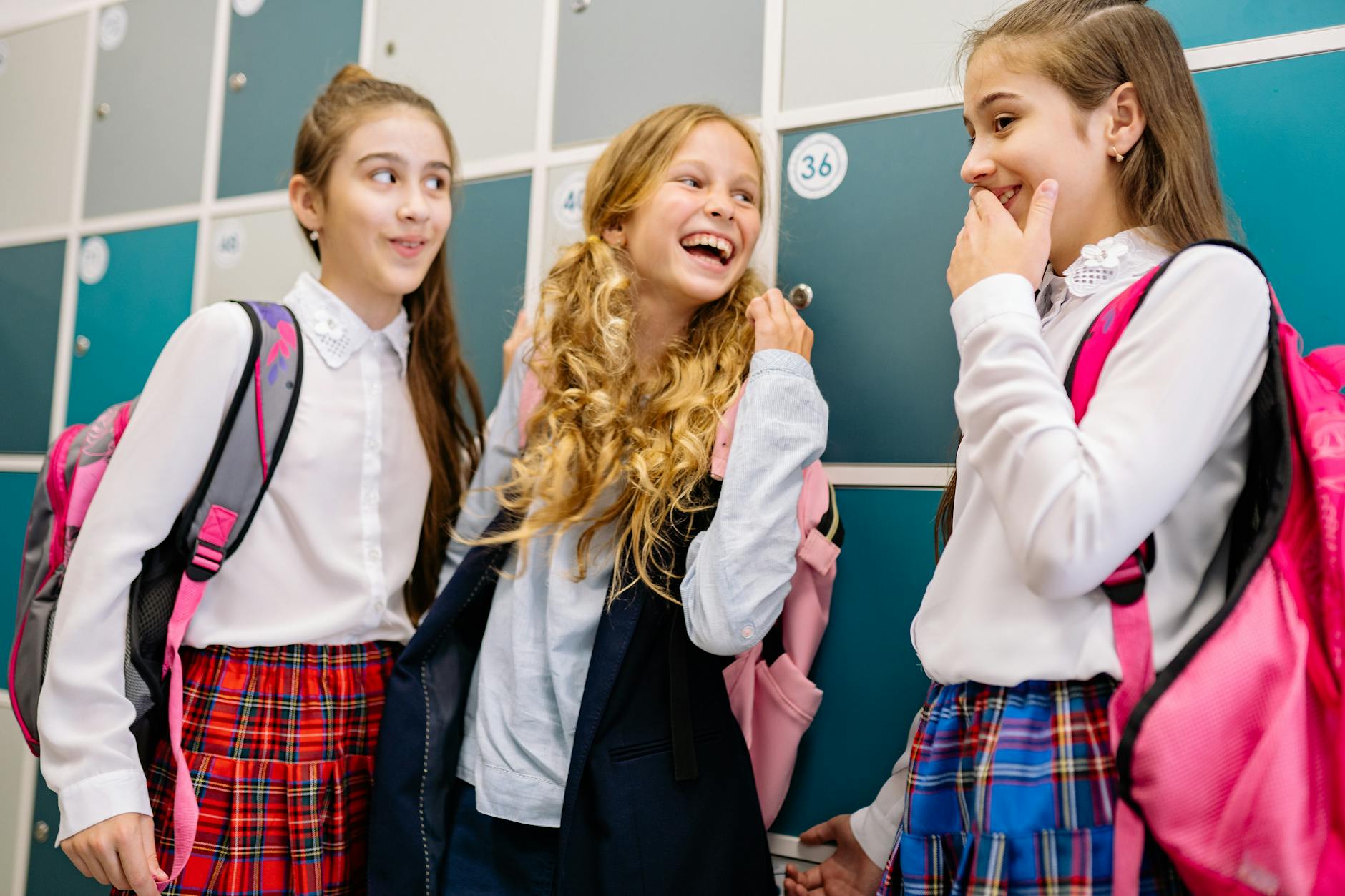
One of the girls at the sleepover found pornography, and as they all looked through the pages, I became the target. I was questioned and mocked. I was forced to position myself in poses the girls saw in the books. I participated and did my best to act as though it didn’t bother me. I did my best to pretend I was having fun. The embarrassment and shame were unbearable, and I felt trapped. I was too afraid to leave because I didn’t want to answer questions about what happened or face harassment in school for being the one who left one of the most coveted sleepovers with the most popular girls. That would have been a great way to seal my fate and get punished in one swift decision. So, while staying was AWFUL, it was the better of the two decisions. At least, that’s how I saw it.
One thing my husband and I have implemented in our home is a code system. We can communicate using code so that anything we say can seem perfectly innocent but can get us out of a situation quickly and without question. I wish I had this option as a child, but I am grateful to have it as an adult—as a parent.
So, while the seven-year-old holds my hand, finally out of the woods, and the ten-year-old continues to ask questions about my continued friendship with the friend from 4th grade, the twelve-year-old can use the code system to get out of her situation without looking like a “baby.” I can rescue her from the party. She and I have a code word. And every time that twelve-year-old finds herself trapped at the party, she sends me the code word, and I come to get her. I’m still tempted to chastise her, punish her, belittle her, and hate her, but I remember that she is hurting. I remember that she has already been through so much. She needs to be rescued and protected. She needs love and compassion.
 Burn the Boat!